


"gspone schö"
Circular route
Mountain spring
Admire up to 21 different mountain flowers that bloom in the plant reserve on the Kronberg. The wild trail leads across accessible meadows on the slope and is well signposted.
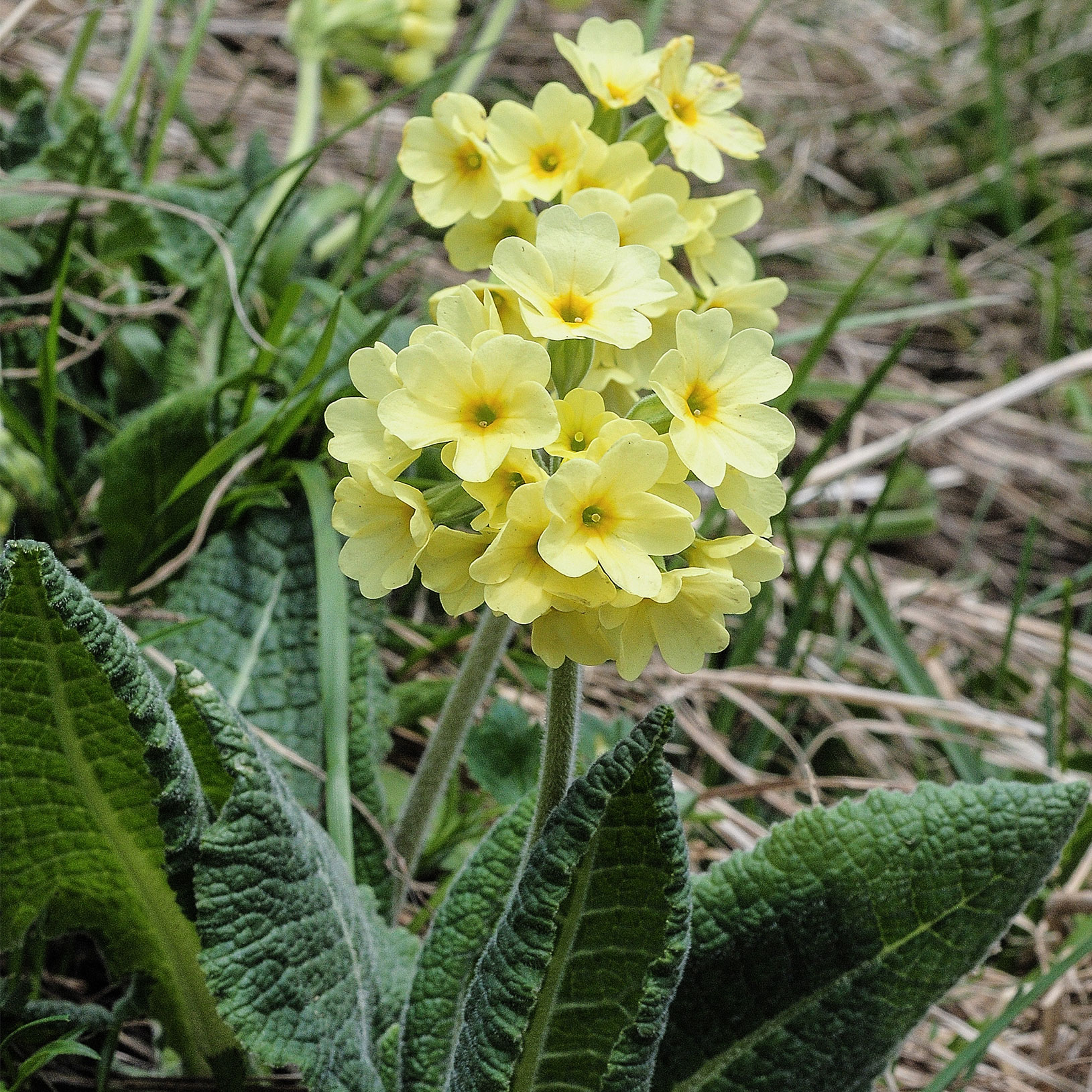
Cowslip / Primrose
Primula elatior
✿ Primulaceae
🖏 April–July
Primula comes from the Latin primus (the first) because it is one of the first flowering plants in spring. Hildegard von Bingen called it the "key to heaven" and praised it as a remedy for melancholy and despondency. Sebastian Kneipp recommended its tea for rheumatism. Digging up the roots of the protected plant is strictly forbidden. It only grows in unfertilized meadows, riparian forests and sparse deciduous forests, which are rarely found today. There are 25 species in the Alps. The plant contains saponins and is used for bronchial catarrh and as a "blood purifier".
Primula comes from the Latin primus (first) since it refers to one of the first flowering plants in the spring. Hildegard von Bingen called them "keys to heaven" and praised them as a remedy for melancholy and despair. Sebastian Kneipp always recommended his primrose tea for rheumatism. It is strictly prohibited to dig out the roots of this protected plant since it only grows in hard-to-find unfertilized fields, alluvial forests and in sparse deciduous woods. There are 25 different types located in the Alps. The plant contains saponins and is used for bronchial catarrh and as a blood purifier.
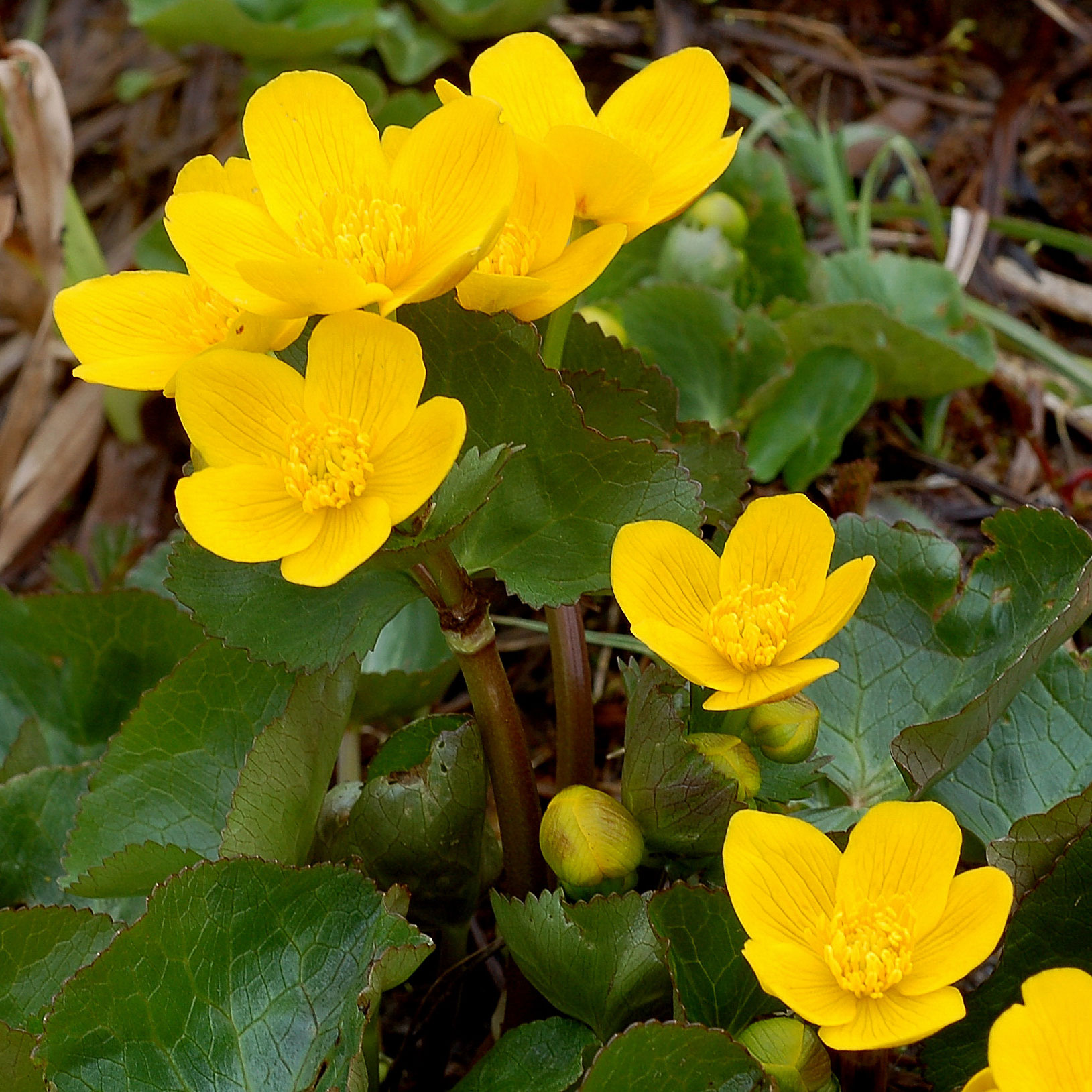
Marsh Marigolds
Caltha palustris
✿ Buttercup family / Ranunculaceae
🗒 May–July / May–July
The yellow flowers of the so-called “buttercup” are a natural dye for butter. The entire plant contains various toxins and is avoided by livestock. Today, it is used as a flower essence according to Dr. Bach to treat feelings of disorientation, or as a homeopathic remedy for ringworm, whooping cough, and menstrual cramps.
The yellow petals of the so-called "buttercup" are a natural dye for butter. The entire plant contains different toxic substances and is thus being avoided by cattle. Today, it is prescribed as a flower essence according to Dr. Bach's recommendations in cases of disorientation or as a homeopathicum against eczema, whooping cough and menstrual period ailments.
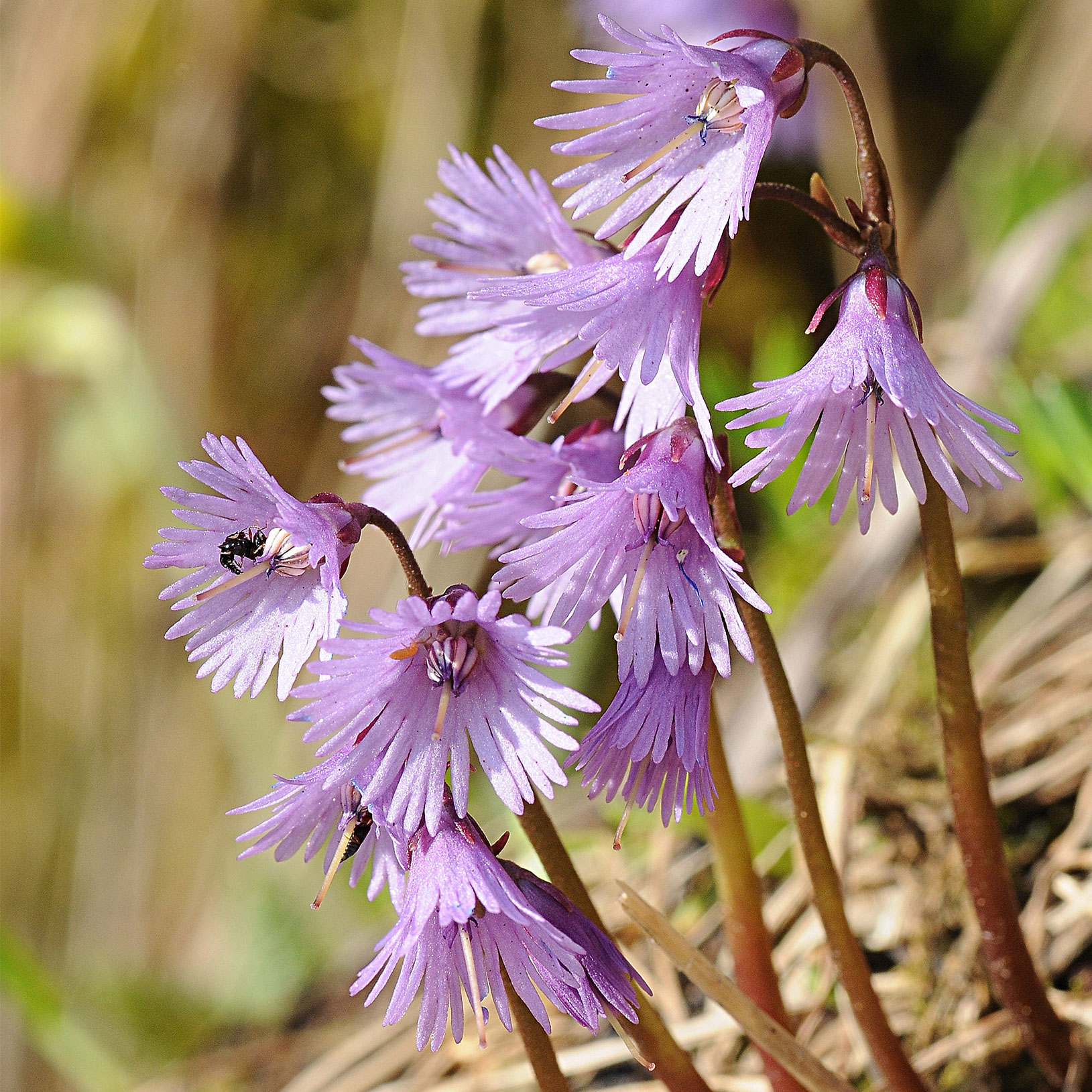
Alpine Bell / Soldanella
Soldanella alpina
✿ Primulaceae
🗒 May–July / May–July
The botanical name Soldanella was already in use in the 16th century. It is said to derive from the fact that the rounded, kidney-shaped rosette leaves resembled the Italian coins known as “soldi.” All native species are protected. When snow lingers longer in some areas of the mountains, the Alpine snowbell is the first to sprout again in the areas where the snow is beginning to melt. That is why it is also called the ice bell. The genus is represented by six species in the Alps.
The use of the botanical name soldanella can be traced back to the 16th century. Supposedly, it is attributed to the fact that the round, kidney-shaped rose petals looked a lot like the Italian coins known as soldi. All native plants are protected. When snow remains on the ground for a longer time in certain areas of the mountain, the Alpine soldanella will be the first flower to appear under the snow that is melting in other areas. This is why it is also called "Eisglöckchen" (literal German for "ice bell"). There are 6 different types of this species in the Alps.
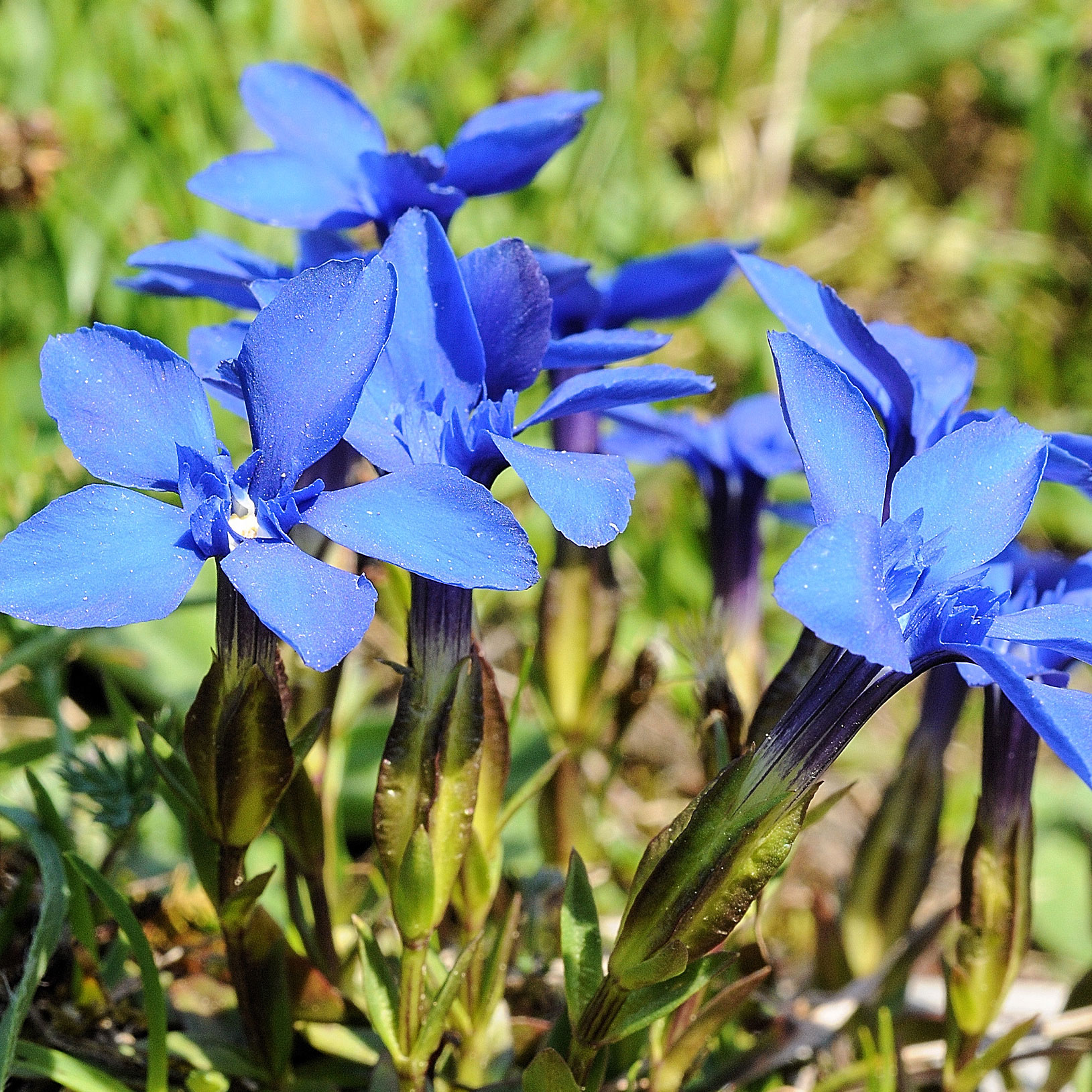
Frühlingsenzian / Spring Gentian
Gentiana verna
✿ Gentian family
🖏 April–July
The spring gentian blooms in blue colonies and is said to cause freckles if you smell it. In popular belief, it is called the "house burner" - it should never be brought into the house because it attracts lightning. When we hear the word "gentian", we often think of the blue flower stars. However, there are also yellow, white, violet and purple gentians. Since ancient times, the yellow gentian, for example, has been a much-praised stomach remedy. Gentian root is taken in small doses. The bitter substances stimulate the taste buds, increasing the secretion of saliva and gastric juices. The family is represented in the Alps with around 50 species.
The spring gentian blooms in blue colonies and is said to cause freckles when you smell it very closely. It has been called a "cause for house fire" as popular belief was that it could not be brought into the home because it would attract lightning. The word "gentian" reminds one of blue flower stars. However, there are also yellow, white, violet, and crimson gentians. Since ancient times, for example, the yellow gentian has been acclaimed in the treatment of stomach ailments. The gentian root can be consumed in small doses. Its bitter substances stimulate the taste buds, thus increasing the secretion of saliva and gastric juices. 50 different types of this plant family can be found in the Alps.
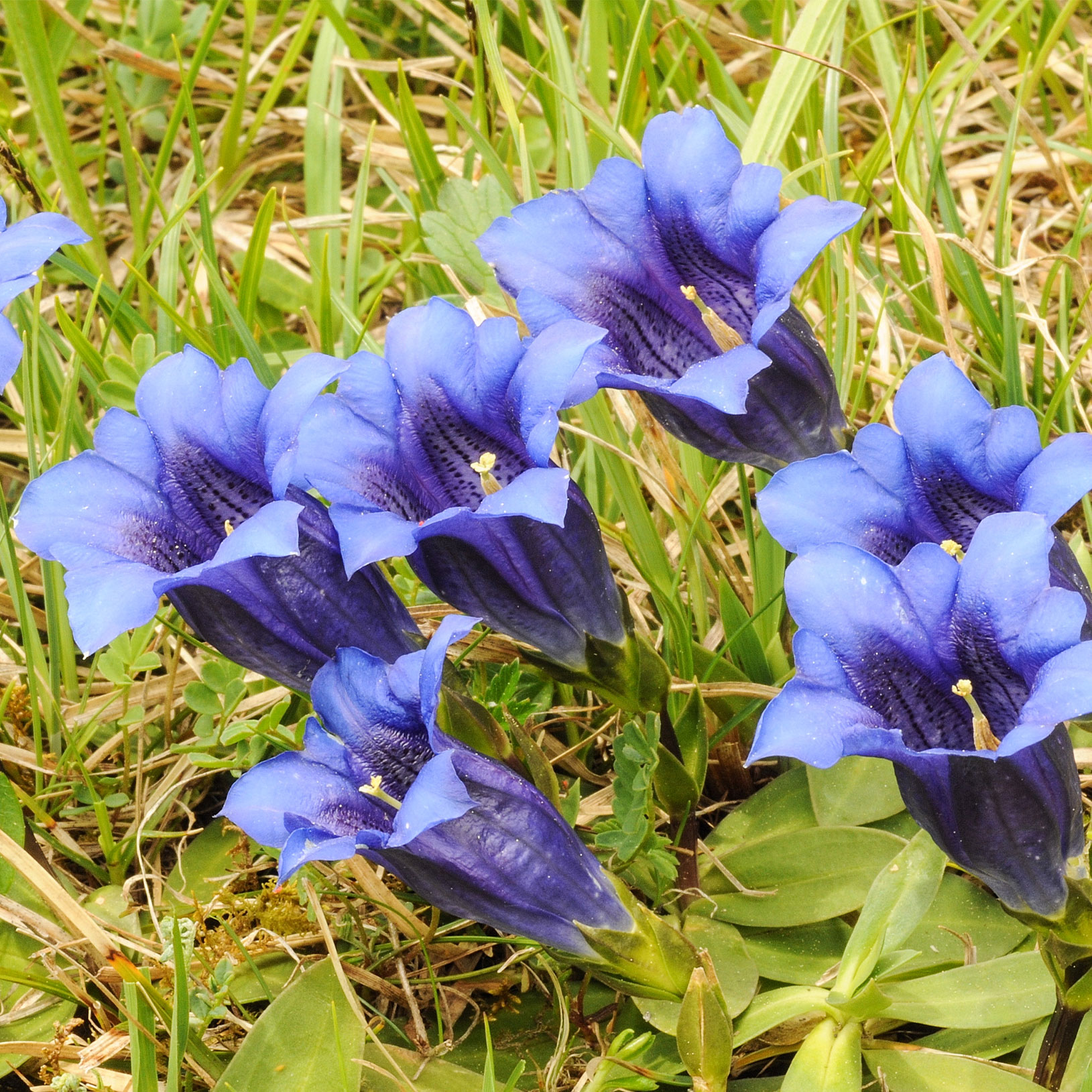
Clusius gentian / Gentiana Clusii
Gentiana clusii
✿ Gentian family
🟓 May–July
When we hear the word "gentian", we often think of the blue flower stars. However, there are also yellow, white, violet and purple gentians. Since ancient times, the yellow gentian, for example, has been a much-praised stomach remedy. Gentian root is taken in small doses. The bitter substances stimulate the taste buds, increasing the secretion of saliva and gastric juices. The family is represented in the Alps with around 50 species.
The word ''gentian'' reminds one of the blue flower stars. However, there are also yellow, white, violet, and crimson gentians. Since ancient times, for example, the yellow gentian has been acclaimed in the treatment of stomach ailments. The gentian root can be consumed in small doses. Its bitter substances stimulate the taste buds, thus increasing the secretion of saliva and gastric juices. 50 different types of this plant family can be found in the Alps.
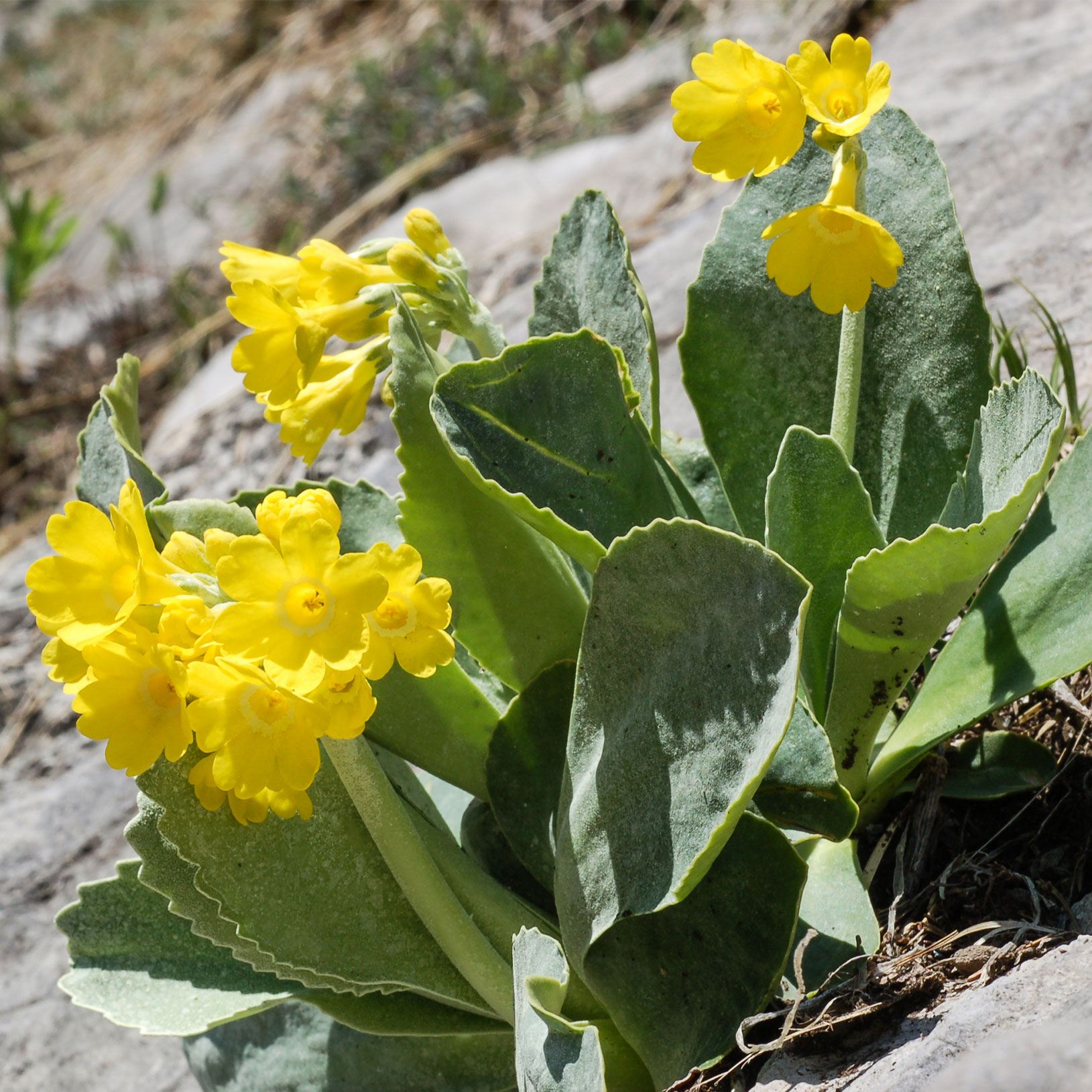
Auricle / Auricula
Primula auricula
✿ Primulaceae
🟓 May–July
The auricle is a typical rock plant. As it often grows on rocky slopes, it is said to be good for dizzy spells. Its root used to be used medicinally, but now other primrose species are used. There are around 65 species in the Alps.
Auricula is a typical rock plant. Since it often grows on mountain cliffs, it is supposed to be very good for treating dizziness. Its root used to be used in medicine, but today, other herbs are used instead. There are roughly 65 different types located in the Alps.
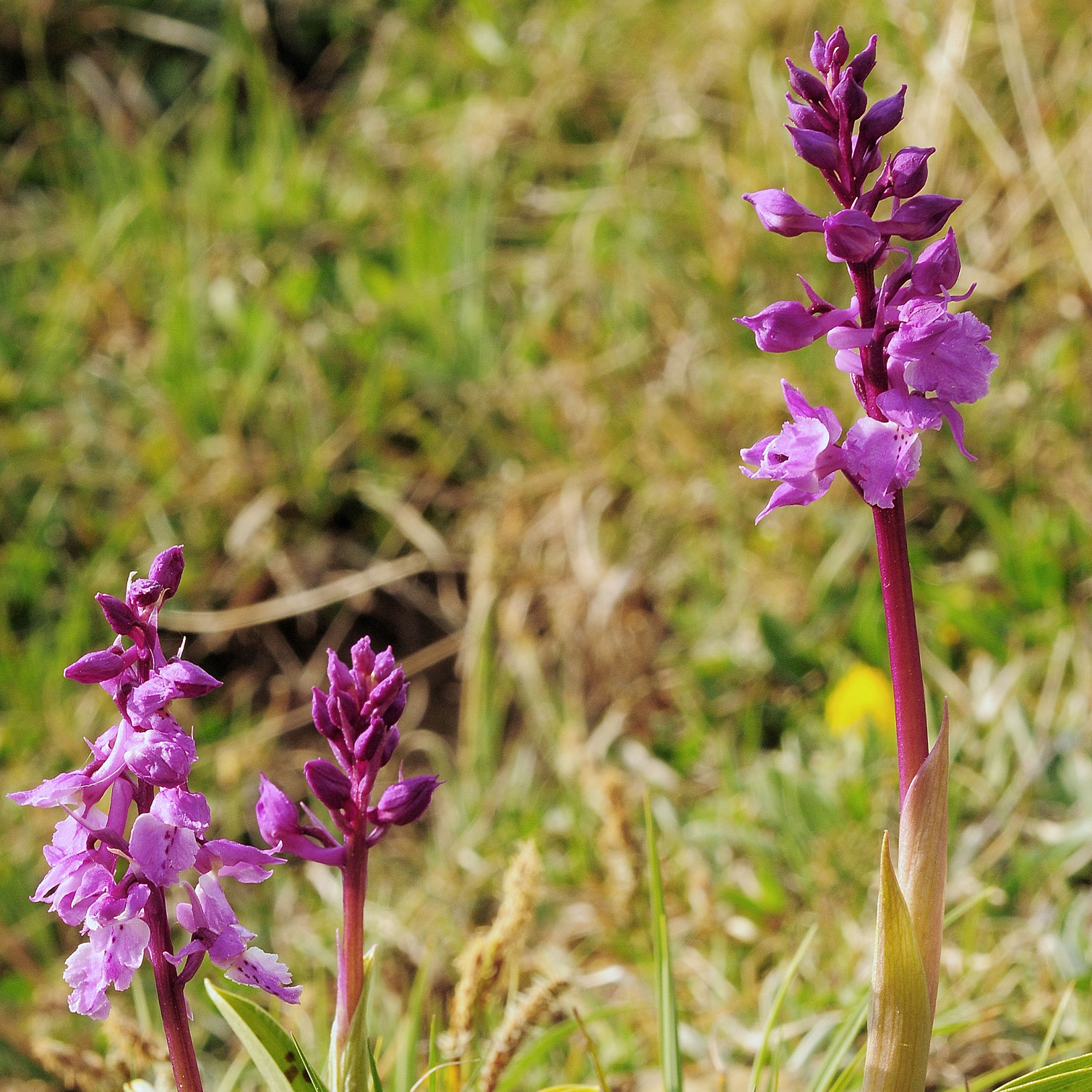
Orchid / Wild Orchid
Orchis
✿ Orchids
🗒 April– May
Like all native orchid species, it is a protected species. It has always been a symbol of fertility, but above all of the power of love. Until well into modern times, men ate the fresh bulb and believed that it improved their potency. In the Orient, the powder of the root is still used to regain lost fertility. The above-ground parts are somewhat poisonous, but the root tubers are not; they contain a valuable mucilage drug.
Like all domestic orchid types, this one is protected as well. It has always been a symbol of fertility, however, specifically for the power of love. Until recent times, men would eat the fresh bulbs, thinking that it would help improve their potency. In the eastern world, the powder of the root is still used to regain fertility. The aboveground parts are a little toxic, but the root bulbs are not. They actually contain a valuable mucilaginous drug.
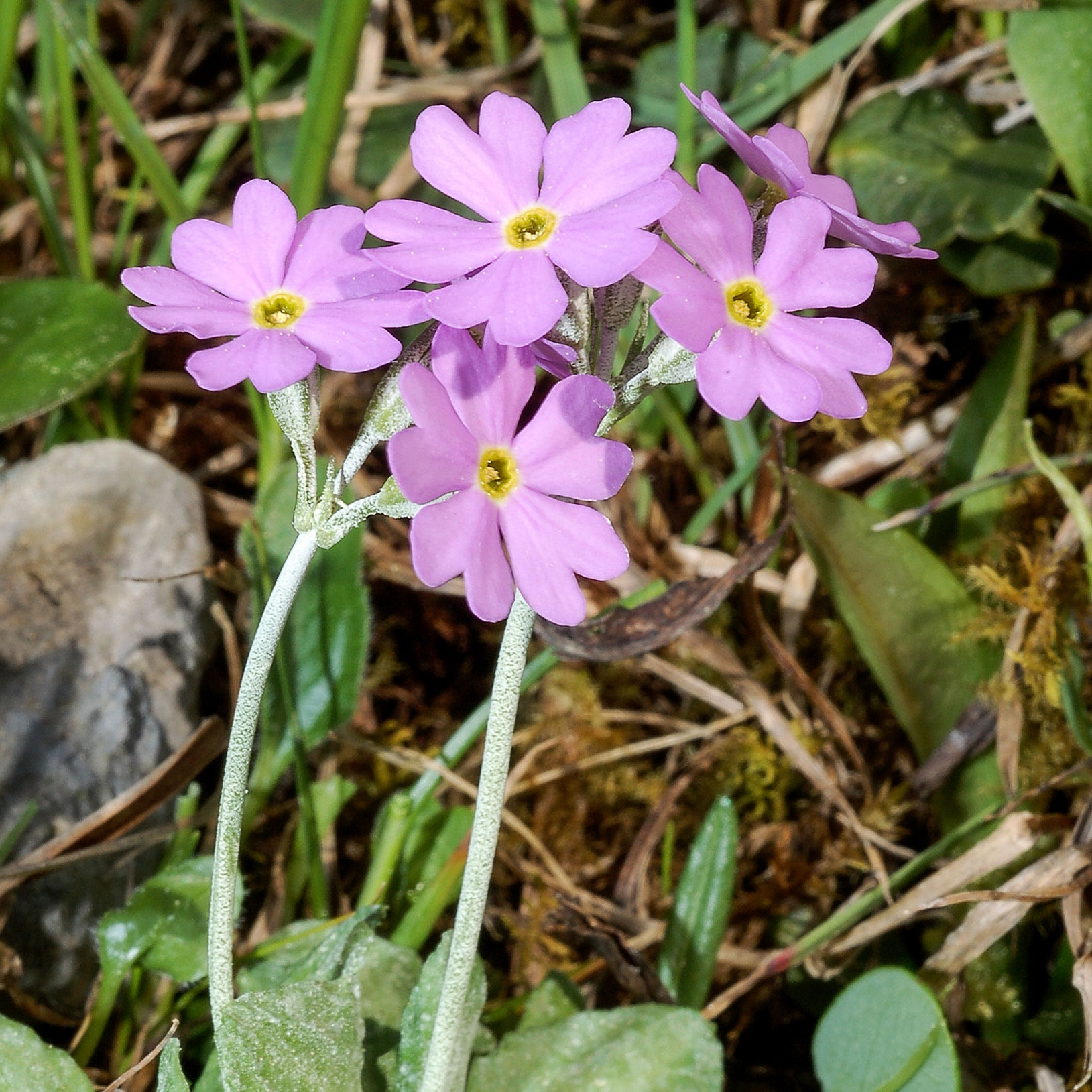
Mehl-Primel / Birds-Eye Primrose
Primula farinosa
✿ Primulaceae
🟓 June–July
Primula comes from the Latin primus (the first) because it is one of the first flowering plants in spring. Related to the classic primrose, the flour primrose has a white coating on its underside. It is one of the most common alpine primroses. The primrose genus was so popular in medicine because of its medicinal properties that it almost became extinct and is now protected. There are around 65 species in the Alps.
Primula comes from the Latin primus (the first) since it refers to one of the first plants that flower in the spring. Since it is related to the classic primrose, birds-eye primrose has a white coating on the bottom. It is one of the most common Alpine primrose types. The primrose species was so popular in medicine because of its healing substances that it almost became extinct, which is why it is protected today. There are roughly 65 different types located in the Alps.
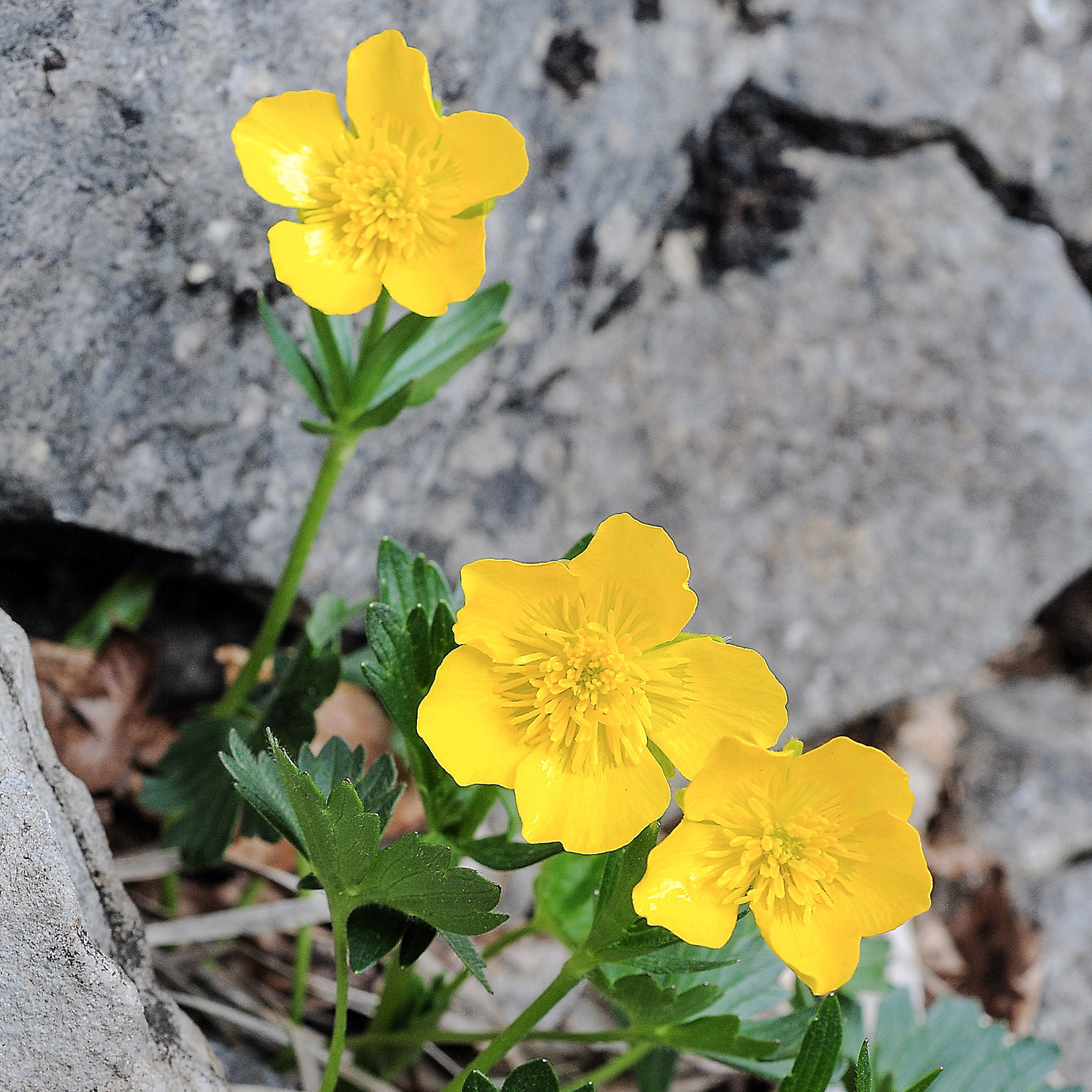
Berg-Hahnenfuss / Mountain Buttercup
Ranunculus montanus
✿ Buttercup family / Ranunculaceae
🟗 May– August
As a flower essence according to Dr. Bach, buttercup is said to help build self-confidence. Hunters hoped that eating the fresh leaves would give them a head for heights. In homeopathy and in the past as a household remedy, they helped with chest pains, rheumatism and skin rashes. Some of these applications are no longer in use today. There are around 50 species in the Alps that are difficult to distinguish. Many species are poisonous to varying degrees. The plants cause skin irritation when rubbed into the skin. They lose their toxicity when dried.
Dr. Bach claims that his mountain buttercup flower essence can help build confidence. Back in the day, hunters hoped to avoid dizziness by consuming the fresh petals. It was used in homeopathy and as a household remedy to help with sharp pain in the chest, with rheumatism and skin rashes. Some of these uses are no longer common today. There are roughly 50 different types located in the Alps, and they are difficult to distinguish. Many of these types can be toxic in various amounts. When applying to the skin, this plant can cause skin irritations. When dried however, they lose their toxins.
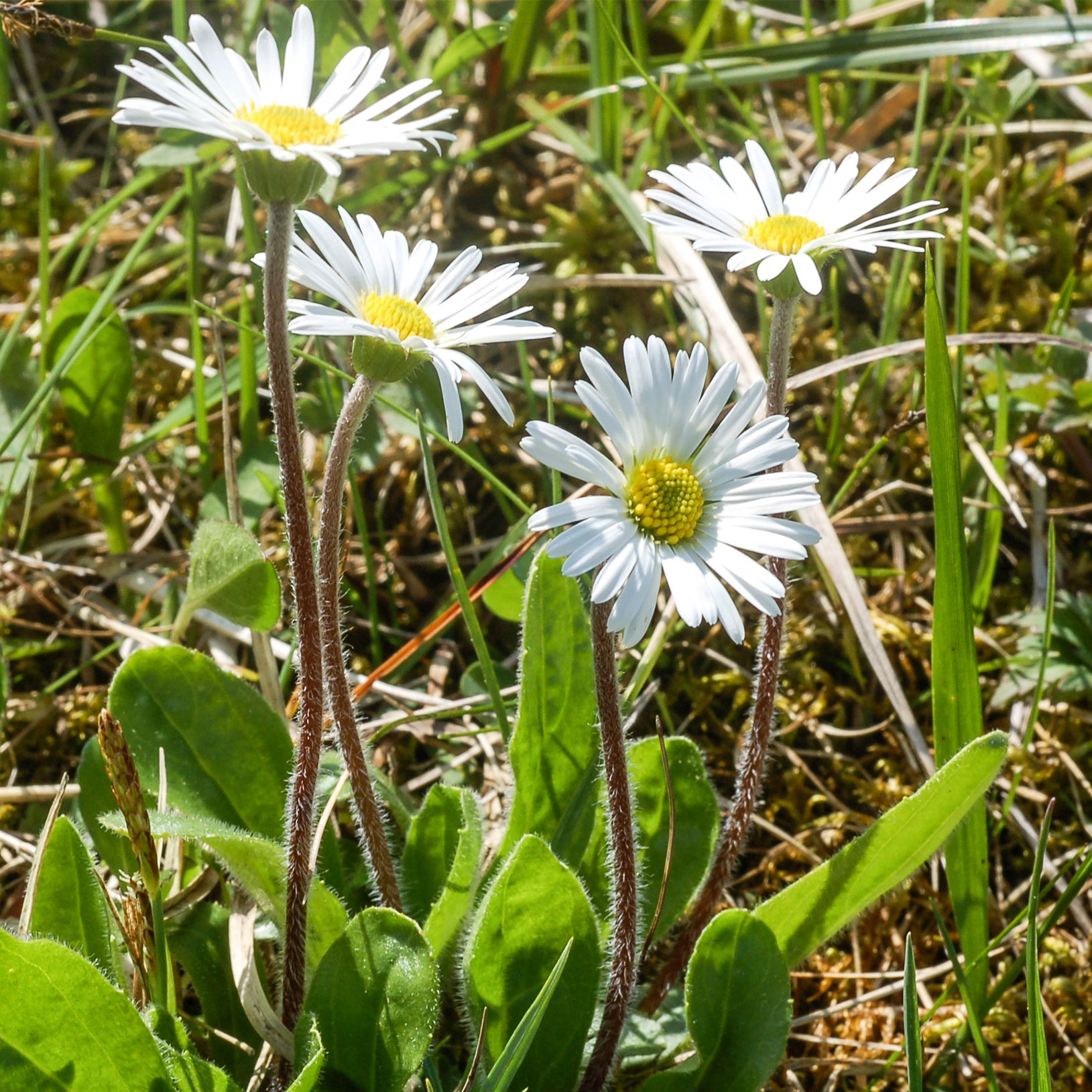
Alpine Mass Lovage / Aster Bellidiastrum
Aster bellidiastrum
✿ Asteraceae / Daisy family
🗒 June–July
According to legend, the so-called daisy originated from the tears that Mary wept on her flight to Egypt. Like many other spring flowers, the first three daisies found each year are said to have special healing powers. Hildegard von Bingen recommends healthy people to eat them because they increase good blood and prepare a clear mind. In the Alps, daisies are probably the largest family and are represented by over 500 species.
Legend has it that the so-called daisy flower sprang from the tears that Mary cried on her escape to Egypt. Similar to the other spring flowers, the first three daisies that are found in the new year are said to have especially strong healing power. Hildegard von Bingen recommends healthy people eat them because it multiplies the good blood and helps keep a clear mind. In the Alps, the daisy plant family is probably the largest family with more than 500 types.
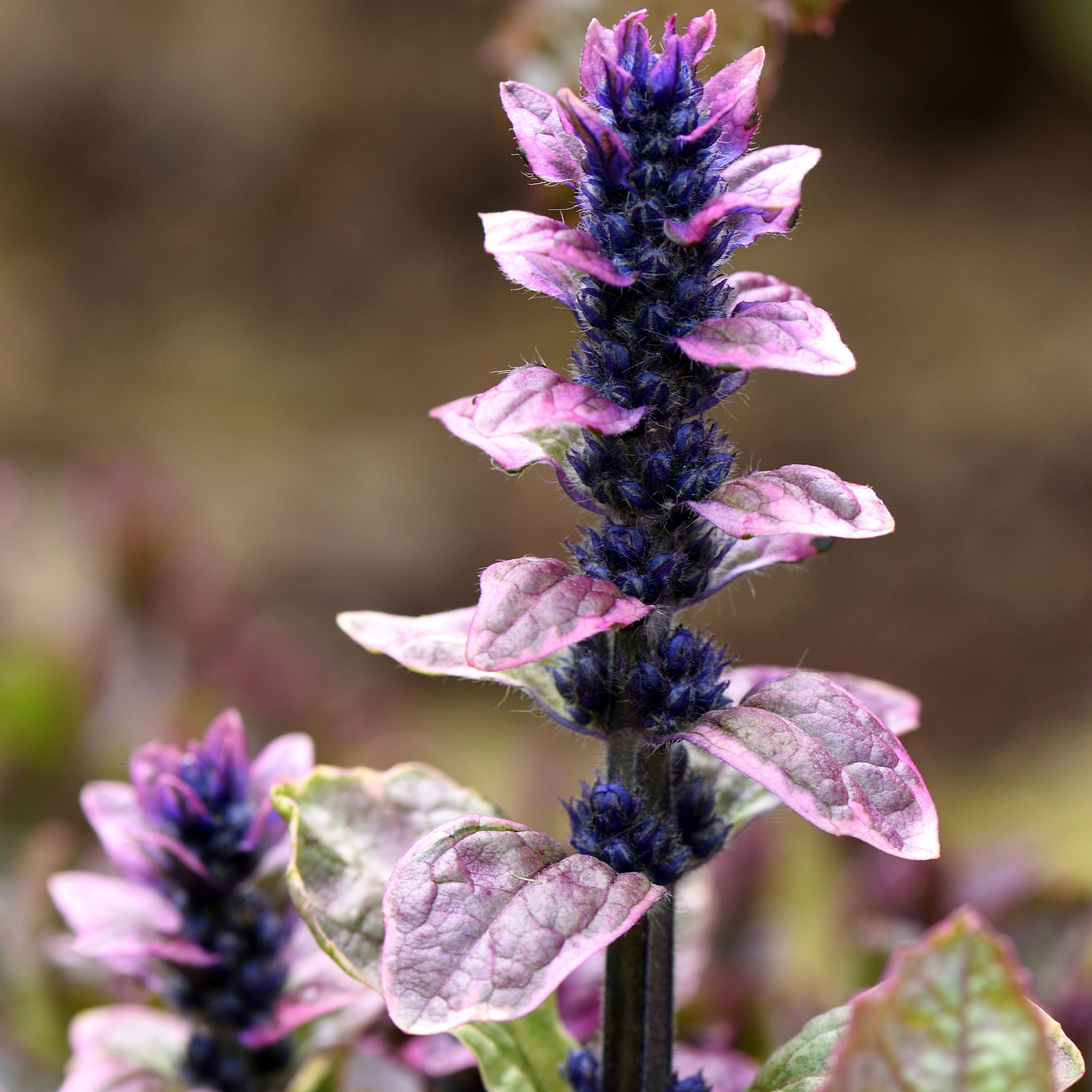
Pyramidal Ajuga / Pyramidal Ajuga
Ajuga pyramidalis
✿ Lamiaceae / Labiate family
🟓 June–July
"Whoever has Gunsel and Sanikel, offers defiance to the wound doctor with a leaf." This indicates the extent to which people trusted goutweed as a wound herb. It is said to have an analgesic effect. As an ointment, the old medicinal plant helps with bruises or contusions. Dried, it belongs in the classic home tea and the fresh shoots in the herb kitchen. Essential oils are widespread in the family. It comprises around 120 species, including numerous aromatic plants.
There is a common saying in German ("Wer Gunsel und Sanikel hat, bietet Trotz dem Wundarzt mit ein'm Blatt."), which proves how much people trusted this plant to treat wounds. It is said to have an analgesic effect. Its paste can be used to treat bruises or contusions. The dried plant can be used in classic teas, and the fresh sprouts can be used as herbs in the kitchen. This plant family has also found its use in essential oils. There are roughly 120 types, including numerous spice plants.
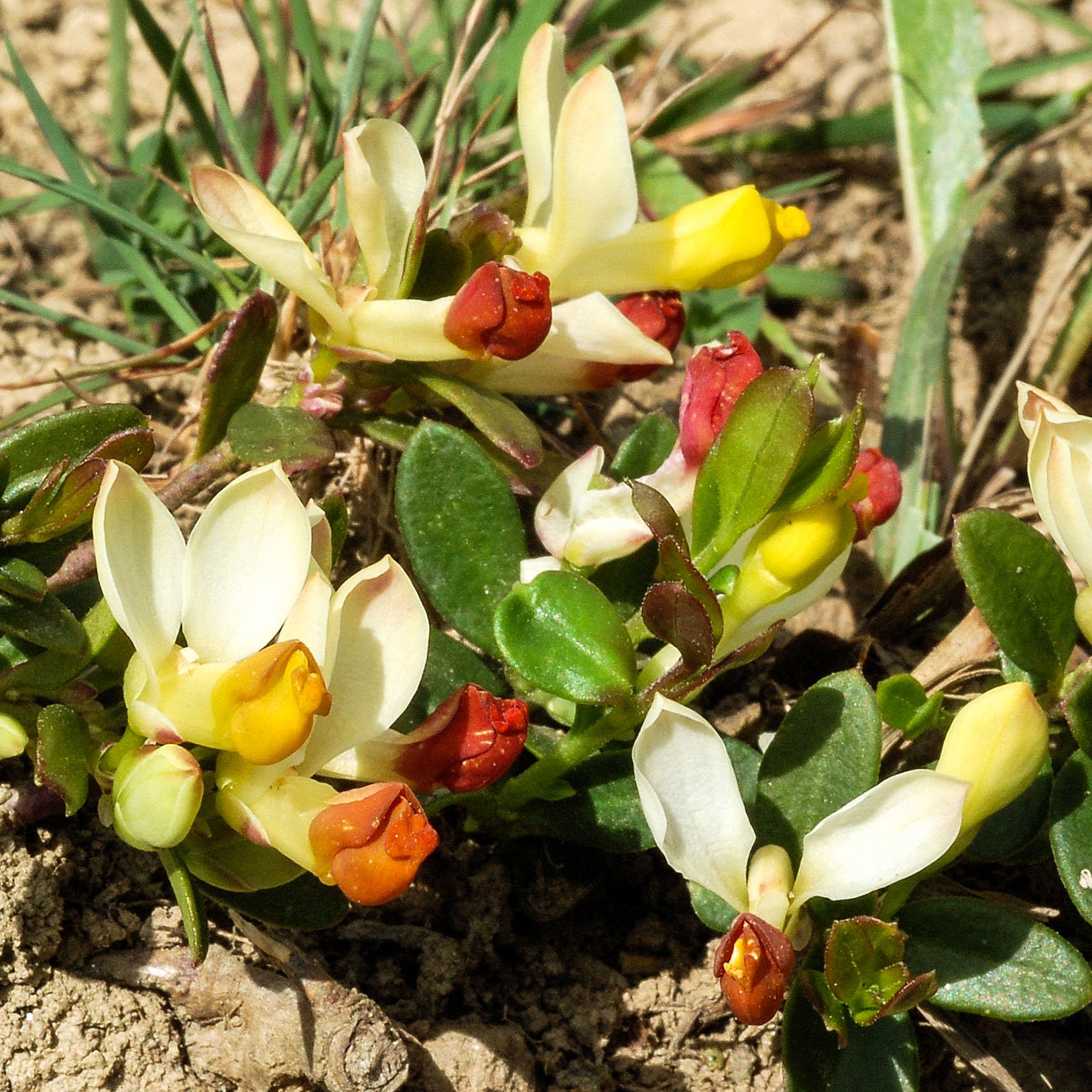
Box-leaved milkwort / Shrubby milkwort
Polygala chamaebuxus
✿ Milk-vetch family / Polygalaceae
🖏 April–July
Its relatives from North America (Polygala senega) and Asia (Polygala sibirica) are known for their potency-enhancing effect and are used for love potions. Its use in European folk medicine declined because the ragwort was less common. There are about 12 species in the Alps.
Its relatives from North America (Polygala senega) and from Asia (Polygala sibirica) are known for their potential to increase potency and are used to make love potions. The use in European folk medicine was on the decline because milkwort was harder to find. There are roughly 12 different types located in the Alps.
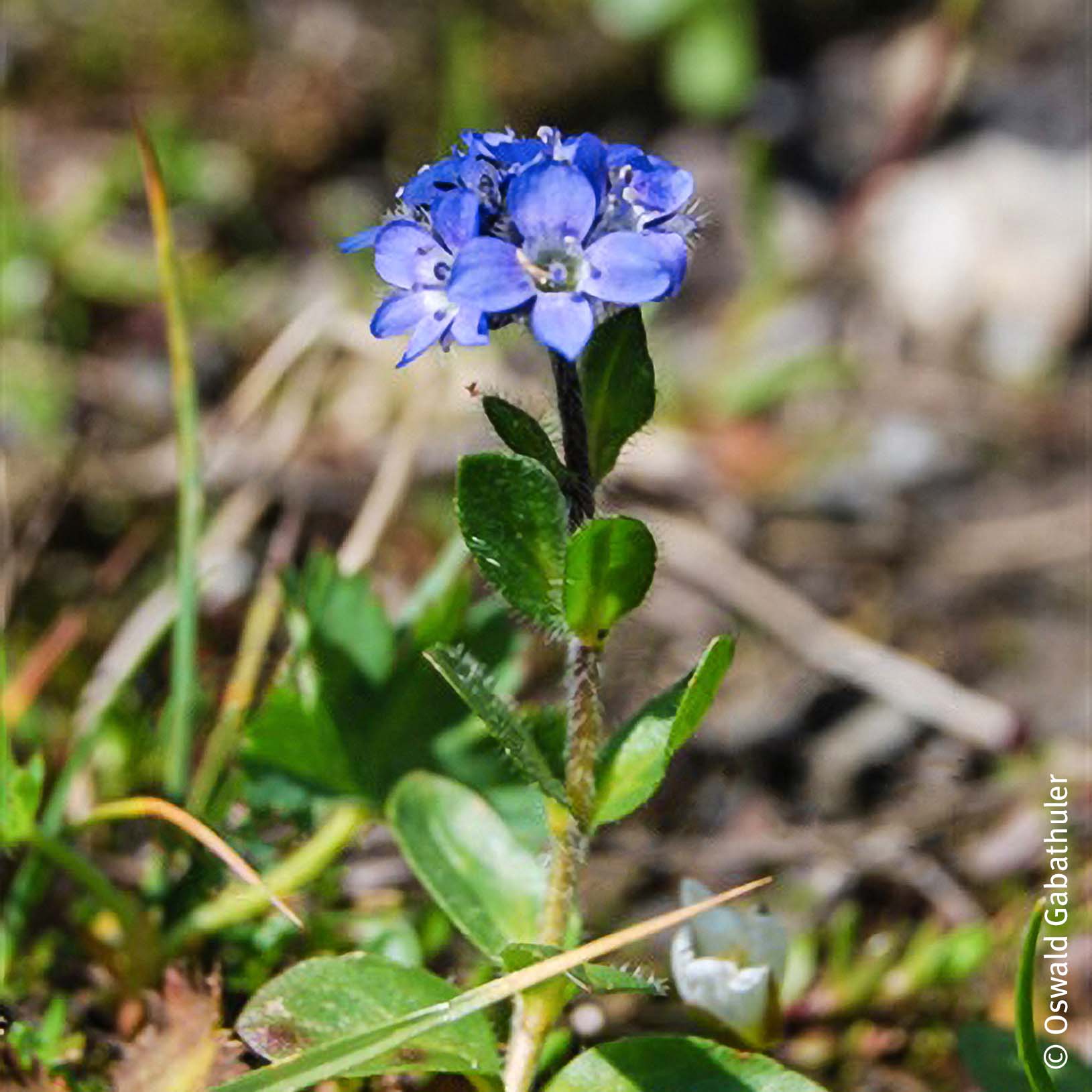
Alpine speedwell / Veronica Alpina
Veronica alpina
✿ Plantain family / Plantaginaceae
🟓 July– August
The name "Veronica" preserves the memory of St. Veronica, who gave Jesus the handkerchief. In the Middle Ages, Johann Franke called the medicinal herb a universal remedy for "all kinds of ailments". The genus includes over 35 species in the Alps.
The name "Veronica" honors the memory of Saint Veronica, who gave Jesus the cloth to wipe off his face. In the middle ages, Johann Franke called this medicinal herb a universal medicine for all kinds of ailments. There are 35 different types of this species in the Alps.
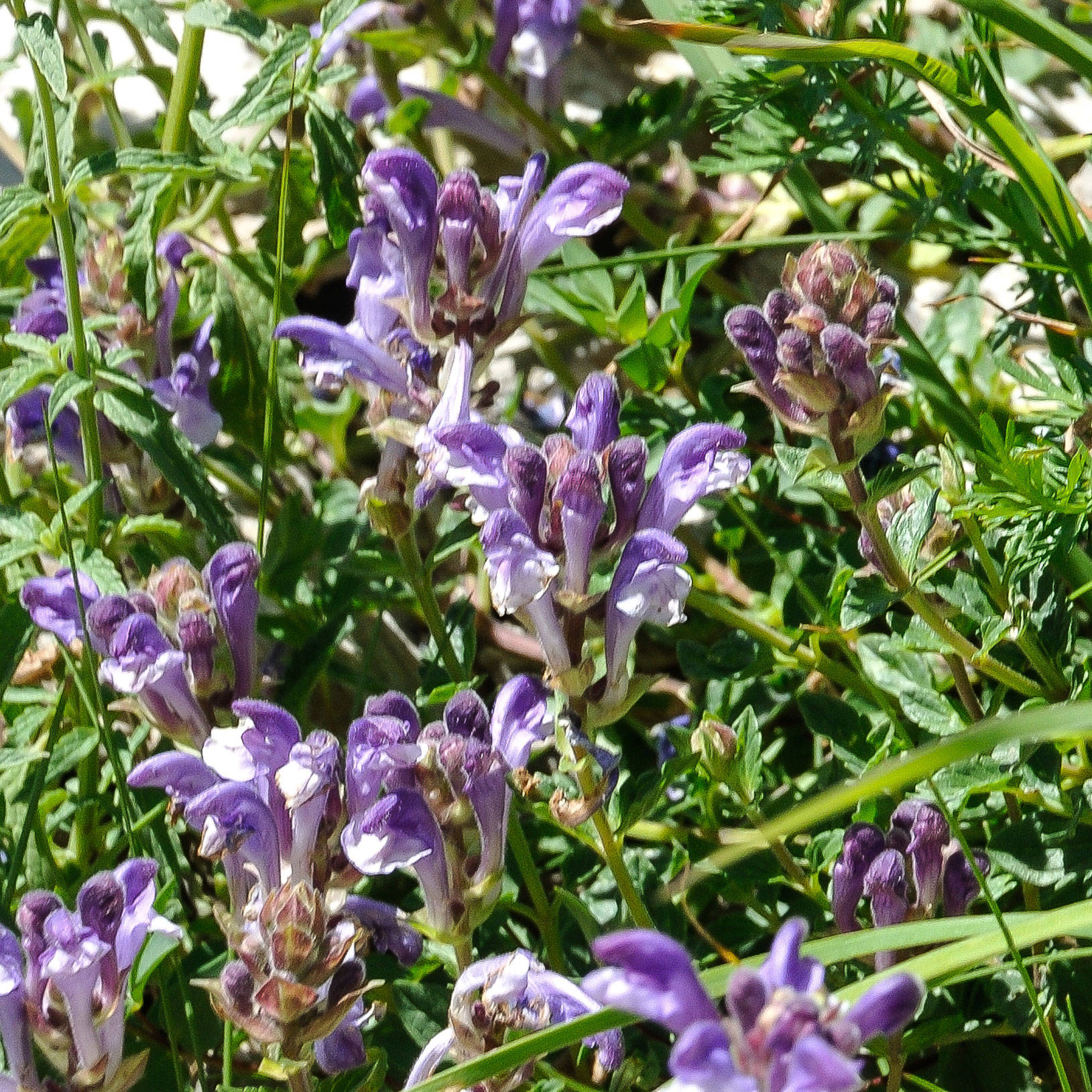
Alpine Skullcap
Scutellaria alpina
✿ Lamiaceae / Labiate family
🟗 June– August
The liver-supporting ingredients help with detoxification and as an aid during withdrawal. Helmet herb calms the nerves when everything threatens to collapse on you. In America, it is a well-known Native American medicinal plant and is one of the typical "supportive" women's herbs. Essential oils are widespread in the family. It comprises around 120 species, including numerous aromatic plants.
This plant's liver-supporting ingredients help with detoxing and during withdrawal. Skullcap calms the nerves when everything seems to crash down upon you. In America, it is a well-known medicinal herb used by native Americans and is among the typical ''supporting'' women's herbs. This plant family has also found its use in essential oils. There are roughly 120 types, including numerous spice plants.
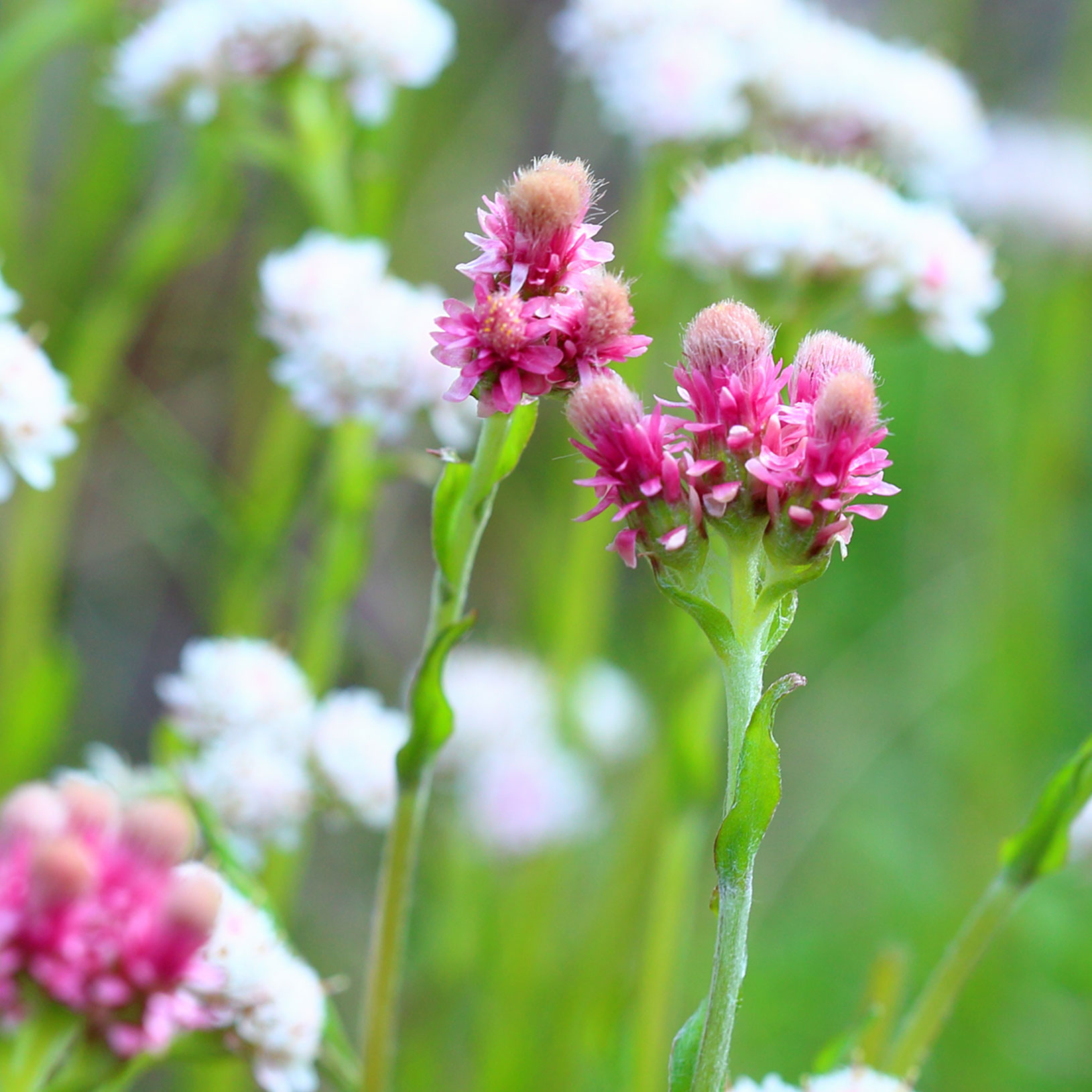
Little Cat's Paw
Antennaria
✿ Asteraceae / Daisy family
🟗 May–June
The plant makes a soft impression and also has a gentle effect on the body. The flower essence according to Dr. Bach helps people who have taken on too great a burden. Cat's paw makes the difficult process tenderly possible. In the past, no bile or liver tea was complete without cat's paw and it was also used as a remedy for diarrhea or persistent coughs.
The plant seems soft and also has that soft effect inside the body. Dr. Bach's flower essence helps those who have taken on too much. Little Cat's Paw helps soothe in difficult situations. This plant used to be used virtually in all teas for gall bladder and liver health and was also known as a remedy for diarrhea or persistent cough.
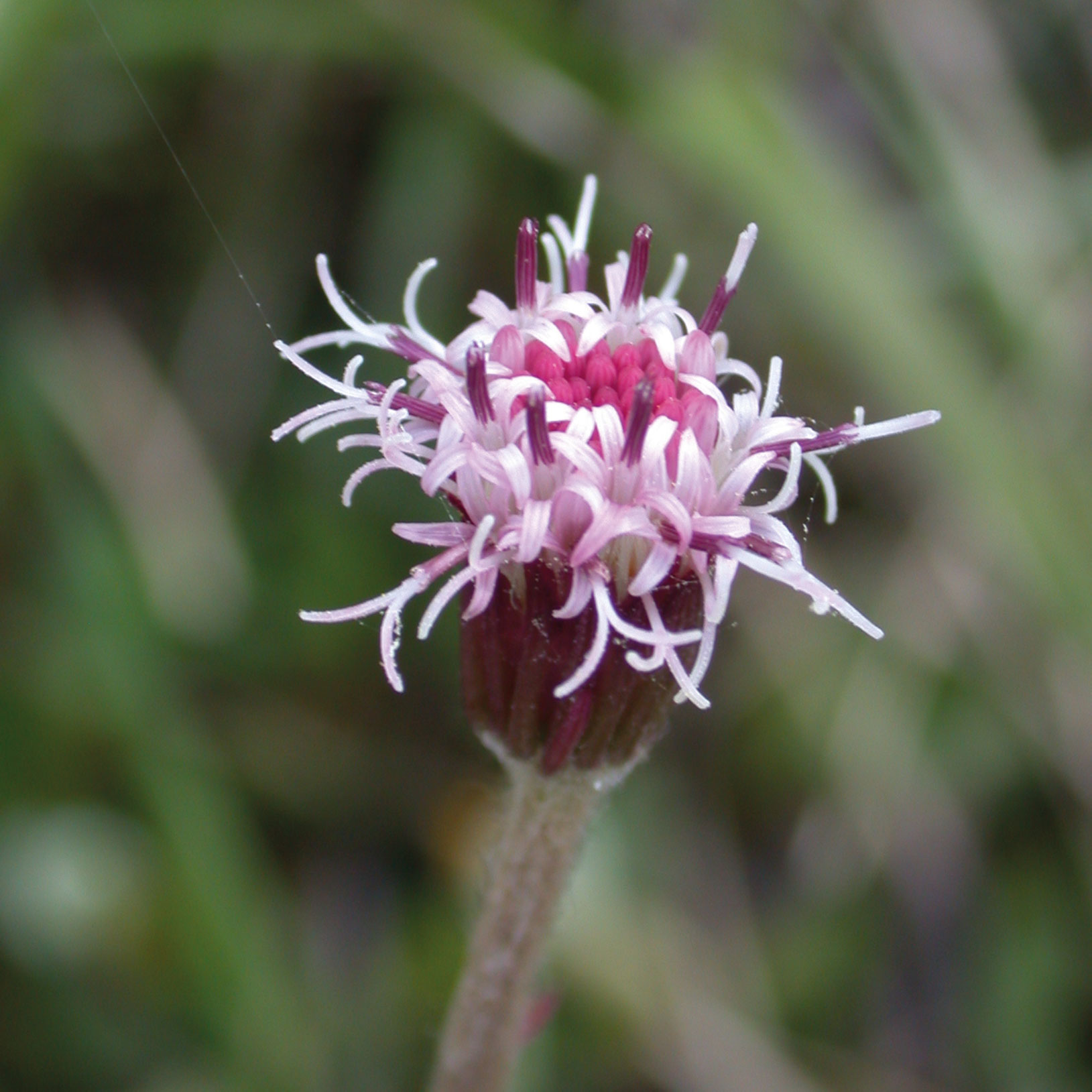
Alpine Coltsfoot / Alpine Coltsfoot
Homogyne alpina
✿ Asteraceae / Daisy family
🟓 June–July
The composite plants are probably the largest family in the Alps and are represented by over 500 species. The alpine burnet is a perennial herbaceous plant that grows to a height of 10 to 40 centimetres.
In the Alps, the daisy plant family is probably the largest family with more than 500 types. Alpine coltsfoot is a persistently herbaceous plant that can reach a plant height of 10 to 40 centimeters.
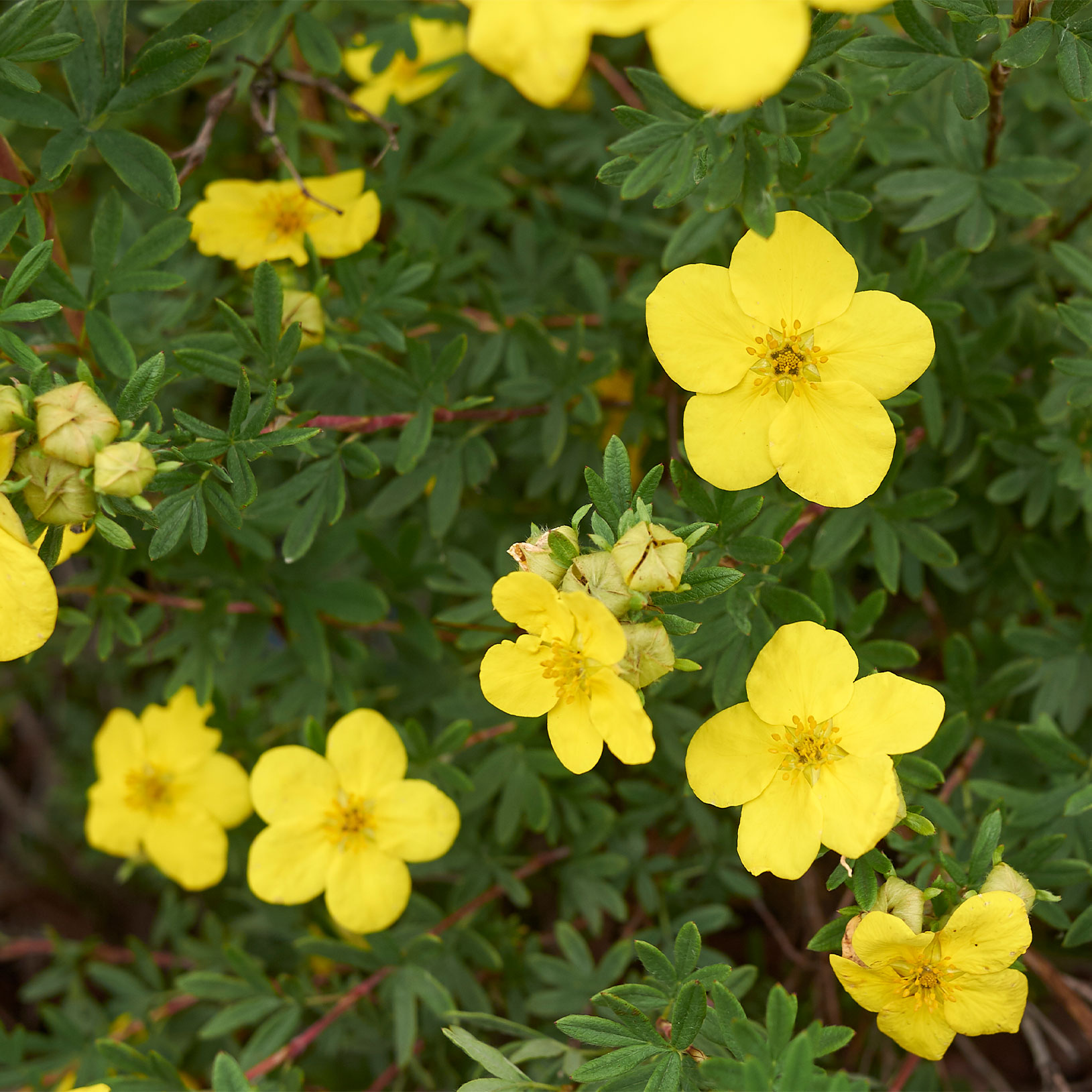
Cinquefoil / Cinquefoil
Potentilla
✿ Rosaceae / Rosaceous plants
🟓 May– August
Because the plant draws its leaves protectively over the flowers when it rains, it is a symbol of the protective Mother Mary. In the Middle Ages, there was talk of many elves and spirits meeting on the leaves of cinquefoil for a cheerful chat. In traditional Chinese medicine, the herb raises the Qi and strengthens the spleen.
Because this plant protects its blossoms by covering them with its petals when it rains, it has become a symbol of the guarding mother Mary. In the Middle Ages, the story was that there were many elves and little ghosts who would meet for a chat on the petals. In traditional Chinese medicine, this plant lifts the Qi and strengthens the spleen.
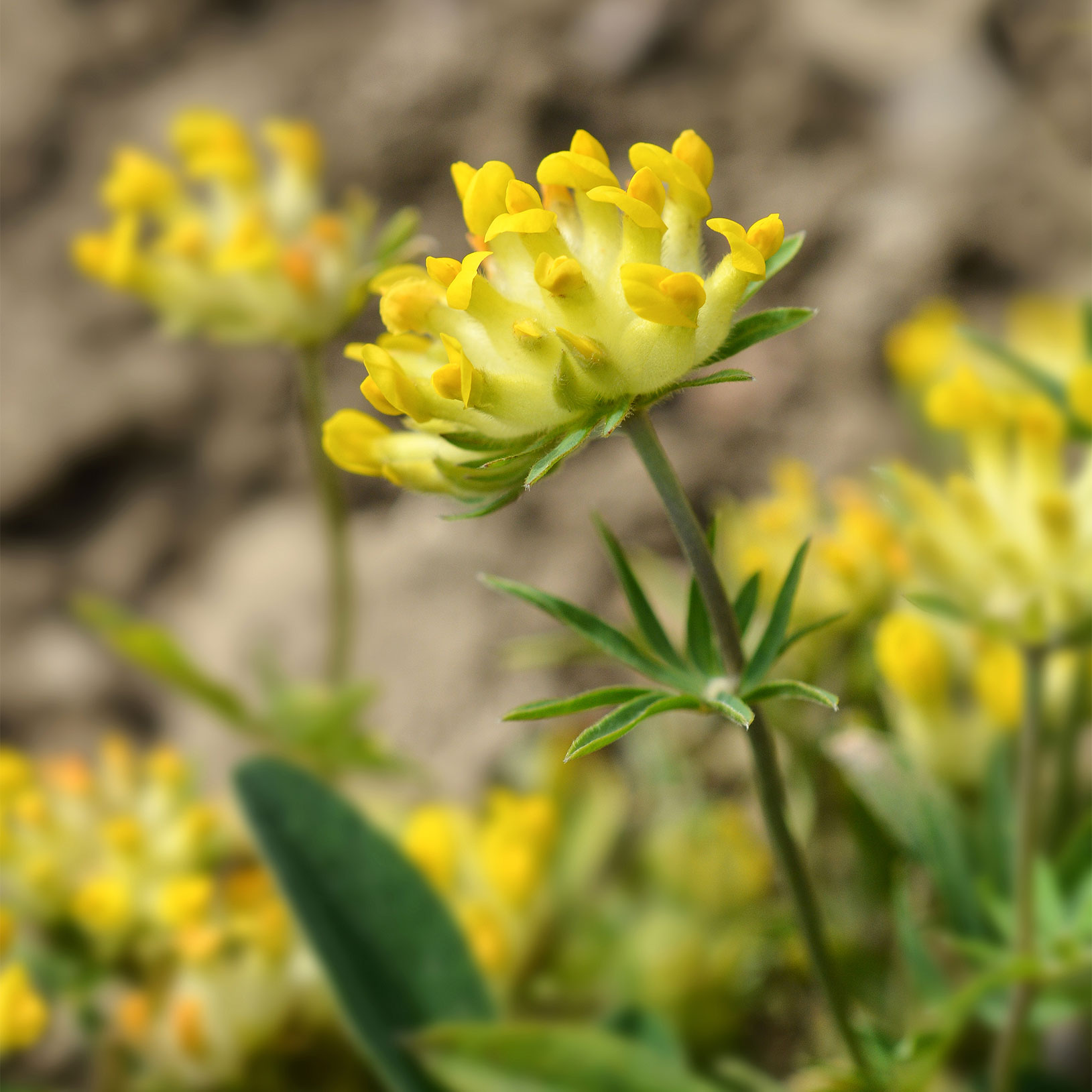
Alpine Kidney Vetch / Alpine Kidney Vetch
Anthyllis alpestris
✿ Legumes
🟓 June–July
The plant is frequently used in folk medicine. For example, as a cough remedy, laxative or, because of the saponins it contains, as a hemostatic for injuries. In the past, it was placed in the cradle of small children to protect them from evil wishes. The custom was widespread throughout Europe. As an "incantation herb", it protects against bad influences caused by evil thoughts.
This plant is used quite frequently in folk medicine. Examples are as cough medicine, laxative or because of its saponins as a blood stopper for injuries. People used to put the plant next to babies in the cribs to protect them from evil wishes. This custom was widely spread in Europe. As a so-called "Beschreikraut", it protects against unpleasant effects, which are caused by evil thoughts.
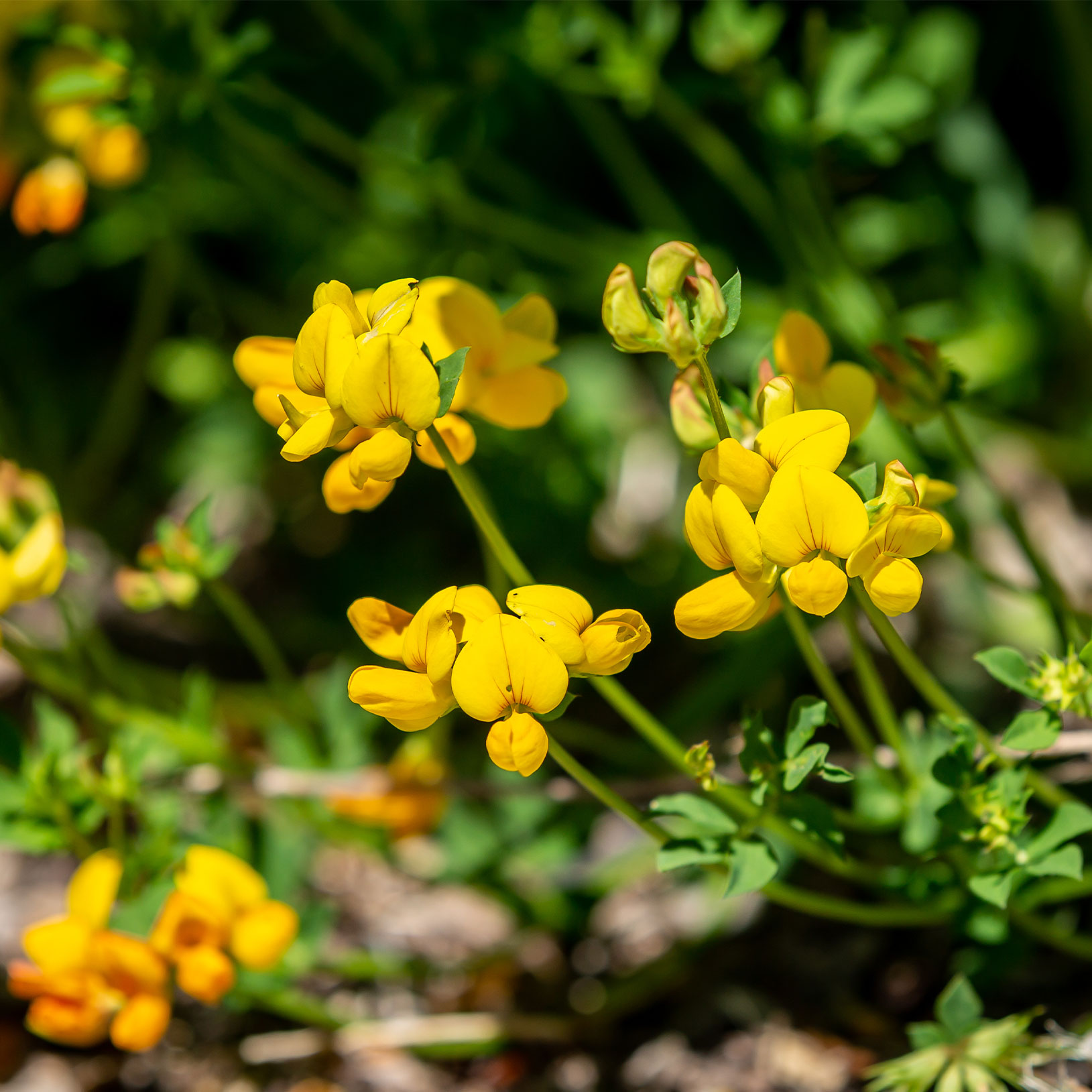
Alpine hornwort / Lotus Alpinus
Lotus alpinus
✿ Legumes
🟓 June–July
Kidney vetch is one of the forgotten plants in folk medicine. The hydrogen cyanide compounds it contains are not harmless, so caution is advised. It is considered a nerve tonic and mild remedy for anxiety or mental exhaustion associated with sleep disorders. The taproot of the genus can reach up to 1 meter deep. The name comes from the flower, which looks like a small horn and forces flower visitors to squeeze out the pollen. The plant is related to the common horn clover at lower altitudes and is connected by morphological transitions.
Lotus alpinus (Alpine "horn clover") is one of the forgotten plants in folk medicine. Its cyan hydrogen compound can be dangerous, so it is important to use caution. It is said to strengthen nerves and to offer slight remedy against anxiety or mental exhaustion that comes along with sleep problems. The taproot of this type can reach as deep as 1 meter. The name comes from the blossom that looks like a small horn and which results in visiting species having to squeeze out the pollen. This plant is related to the common Hornwort in deeper valleys and is connected through morphological transitions.
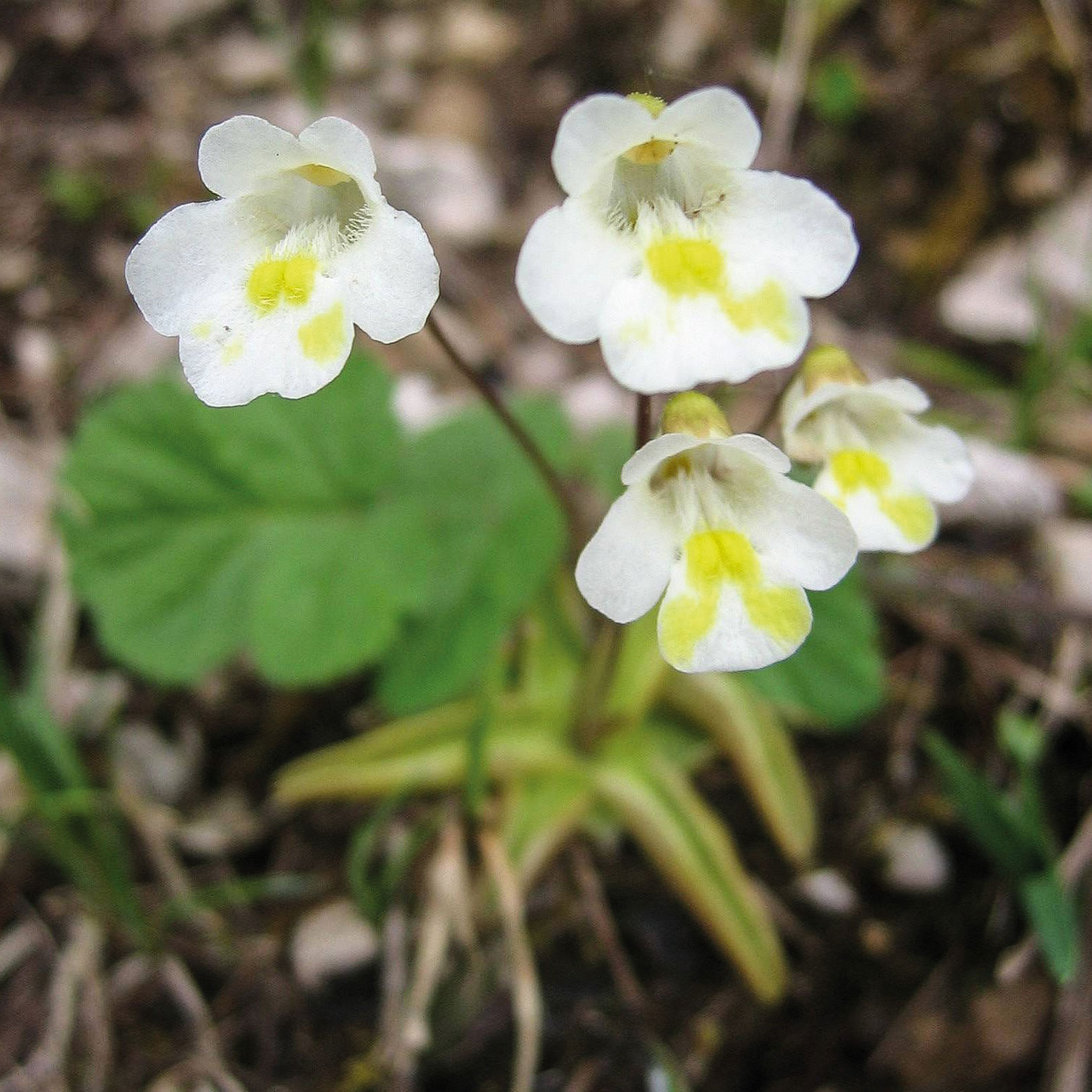
Alpine Butterwort / Alpine Butterwort
Pinguicula alpina
✿ Bladderworts / Lentibulariaceae
🟓 June–July
Insects stick to the leaves, whose protein is dissolved and absorbed through the leaf surface. In this way, the plant can cover part of its nutrient requirements and is able to colonize poor soils. This rennet enzyme was used by herdsmen to thicken alpine milk, which may be one reason why it has almost completely disappeared from the scene. In the past, butterwort was used to treat whooping cough, for example, but there are now more effective remedies. The leaves have a pronounced laxative effect.
Insects get stuck on the leaves of this plant, and their protein is released and then absorbed by the leaf surface. This way, the plant can meet part of its nutrient need and is thus unable to grow on poor-quality soil. This rennet was used by the community of Sennen to thicken Alpine milk, which may be one of the reasons that it has disappeared almost completely. Alpine butterwort also used to be used as a remedy for whooping cough, for which there are much more effective remedies today. The petals have an extremely laxative function.
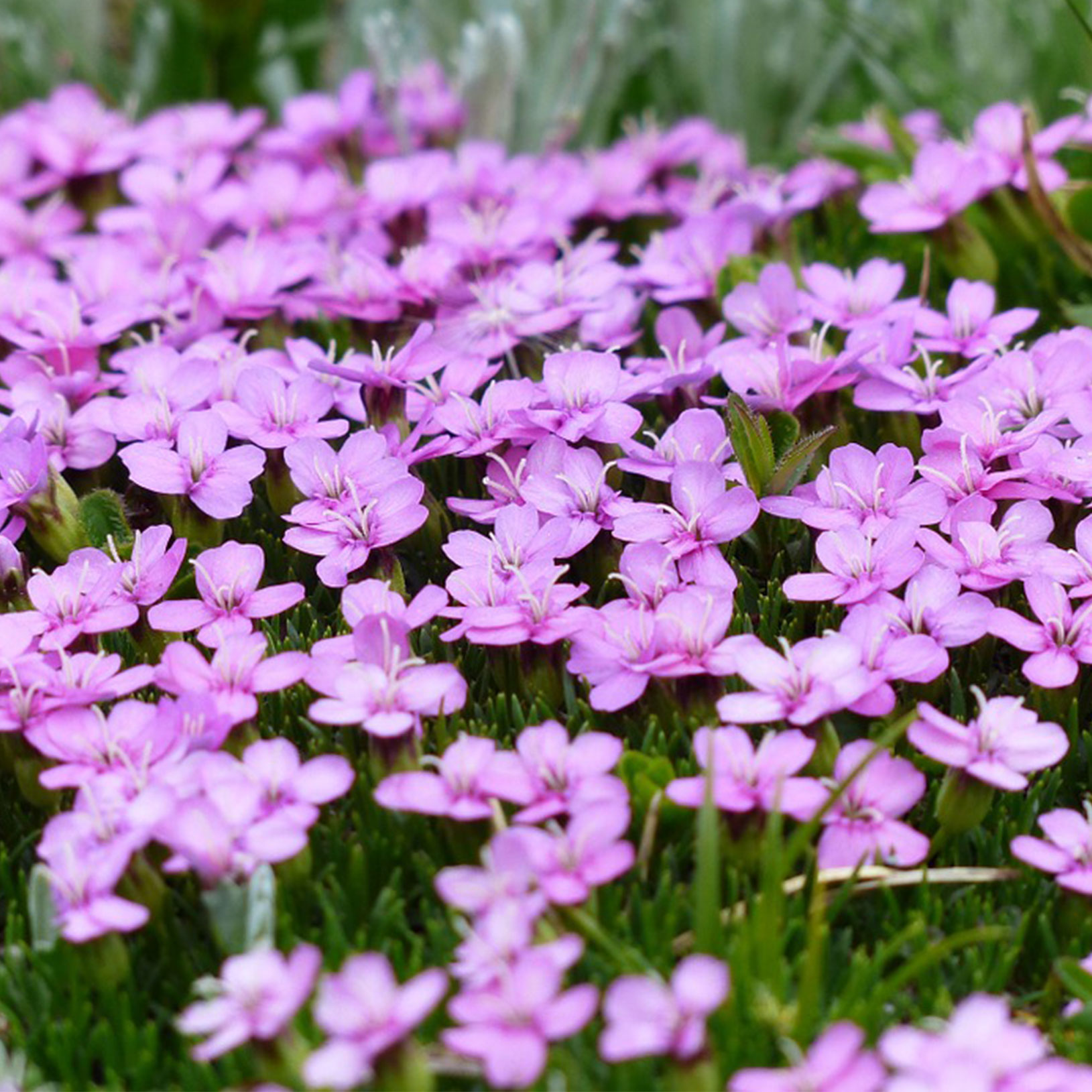
Cushion carnation / Moss Campion
Silene
✿ Carnation family / Caryophyllaceae
🟓 May– August
The plant, which is also known as cress, has a sweet taste and can enhance a summer salad. The root is particularly rich in saponins. Large quantities can be boiled to make a mild washing solution for delicate materials. There are around 180 species in the Alps, many of which are rich in saponins.
Also known as campion, this well-known plant has a sweet taste and can be used to enhance summer salads. The root contains a considerable amount of saponins. A decoction of larger amounts of this plant will result in a mild detergent for sensitive materials. Roughly 180 types can be found in the Alps, and many of them are rich in saponins.